
The pursuit of holistic health necessitates a profound understanding of the rhythmic interplay between the human constitution and the natural world. In the ancient tradition of Ayurveda, this equilibrium is maintained through the practice of Dinacharya, a structured daily routine designed to align the biological rhythms of the individual with the cosmic cycles of the sun and moon. By mastering your body's internal clock, you do not merely enhance your physical vitality; you cultivate a state of mental resilience and spiritual harmony that is essential for enduring well-being.
The Triadic Rhythm: Understanding the Dosha Clock
To embark upon a journey into Ayurvedic medicine, one must first comprehend the concept of the doshas: Vata, Pitta, and Kapha. These three fundamental energies govern all biological and psychological processes. Furthermore, these energies fluctuate in dominance throughout a twenty-four-hour period, divided into four-hour intervals. Consequently, the efficacy of our daily activities: such as nourishment, labor, and rest: is significantly influenced by the dominant dosha of the hour.
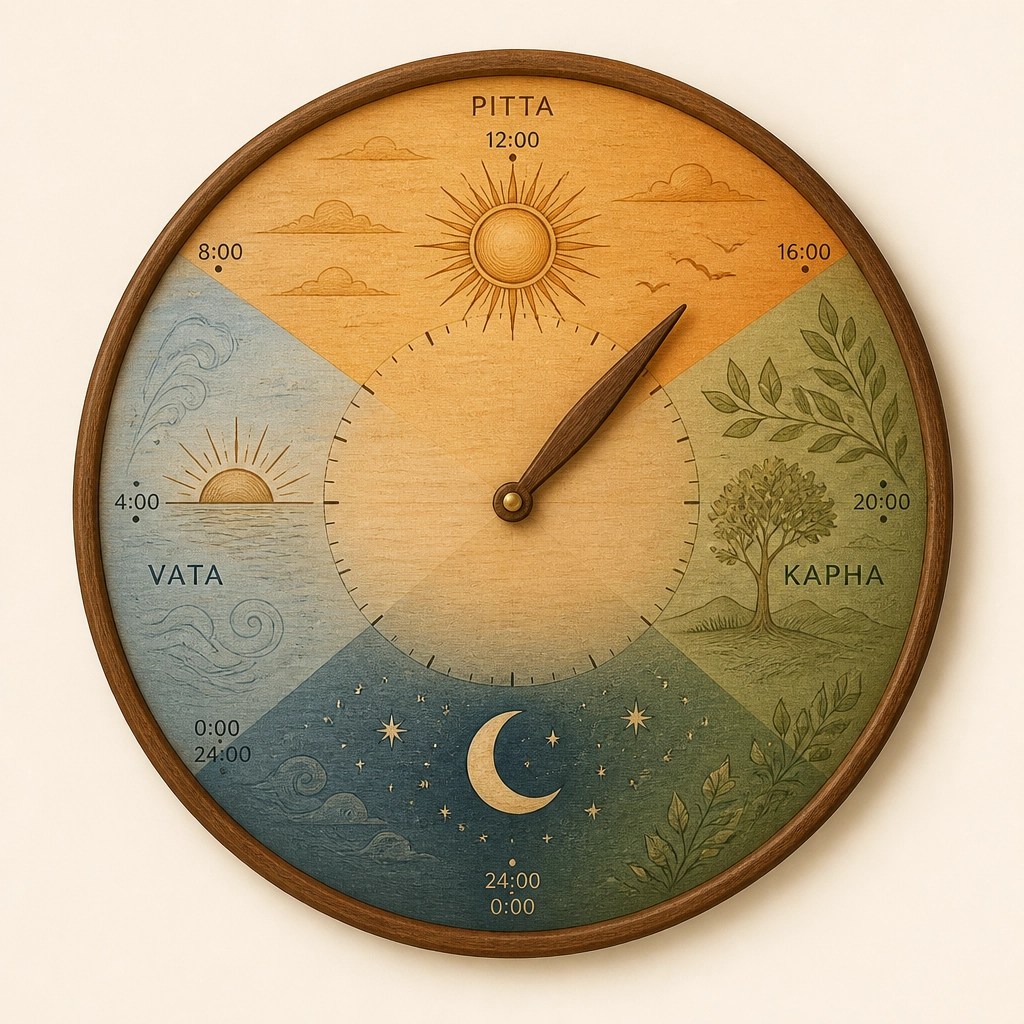
The day begins and ends with the influence of Vata and Kapha, while the peak of the day is dominated by the transformative power of Pitta. Understanding this sequence allows the practitioner to navigate their responsibilities with greater ease and efficiency. When we align our habits with these natural shifts, we minimize the accumulation of ama (metabolic toxins) and foster the steady flow of ojas (vital essence).
The Pre-Dawn and Early Morning Transition (Vata and Kapha)
The interval between 2:00 AM and 6:00 AM is governed by Vata, the energy of movement and space. Ayurveda suggests that awakening during Brahma Muhurta: the "time of Brahman" approximately one and a half hours before sunrise: allows one to tap into the inherent lightness and clarity of this period. This is the optimal time for spiritual reflection, meditation, and the setting of intentions.
As the sun rises, the atmosphere transitions into the Kapha period (6:00 AM to 10:00 AM). Kapha provides stability, lubrication, and strength. However, if one oversleeps into this window, the result is often a sense of heaviness or lethargy. Therefore, a purposeful morning routine is essential to stimulate the body and prepare the mind for the day ahead.
Essential Morning Rituals for Vitality
- Hydration and Purification: Upon rising, one should ingest a glass of warm water to stimulate the digestive tract and encourage the timely elimination of waste. This simple act hydrates the tissues and signals the body to begin its daily detoxification process.
- Oral Hygiene: The practice of tongue scraping is a foundational element of Ayurvedic medicine. Utilizing a copper or stainless steel scraper to remove the coating from the tongue not only enhances the sense of taste but also removes bacteria that have accumulated overnight.
- Mindful Movement: Engaging in physical exercise during the Kapha window utilizes the natural strength of this period to build endurance. Whether through the practice of Hatha Yoga or a brisk walk in nature, movement facilitates the circulation of blood and lymph.

To sustain this early morning momentum, the consumption of a light and nourishing breakfast is recommended. For many, a warm cereal or stewed fruit provides sufficient energy without taxing the digestive fire, or agni. For a deeper exploration of how these habits integrate into a contemporary lifestyle, one might consult our guide on Ayurvedic routines for modern life.
The Solar Zenith: Maximizing Pitta Energy
From 10:00 AM to 2:00 PM, the solar energy is at its most potent, coinciding with the Pitta period of the body clock. Pitta is characterized by heat, sharpness, and transformation. It is during this window that our agni is most robust, making it the ideal time for the primary meal of the day.
In Ayurvedic practice, lunch should serve as the most substantial source of nourishment. Because the digestive capacity is at its peak, the body is best equipped to assimilate complex nutrients and transform them into vital energy. Conversely, consuming heavy meals late in the evening when the digestive fire is waning can lead to imbalance and discomfort. Similarly, this period of high focus and analytical prowess should be utilized for the most demanding professional or intellectual tasks.
Supporting Digestion for Holistic Health
To optimize the benefits of the midday meal, it is imperative to eat in a calm environment, free from the distractions of digital devices or stressful conversations. The integration of specific herbs and spices can further enhance the digestive process. For instance, the use of ginger, cumin, and coriander aids in the breakdown of food and prevents the formation of gas or bloating.
Furthermore, a brief ten-minute walk following lunch can significantly assist the downward movement of energy required for efficient digestion. To understand the nuances of metabolic health, one may refer to our comprehensive resource on how to improve digestion with Ayurveda.

The Afternoon Descent and Evening Restoration
As the clock moves into the second Vata cycle of the day (2:00 PM to 6:00 PM), many individuals experience a shift toward creativity and communication. This is an opportune time for brainstorming, writing, or engaging in social interactions. However, as Vata can also induce a sense of fragmentation or anxiety, it is vital to remain grounded. Periodic intervals of conscious breathing or a brief moment of stillness can prevent mental fatigue.
As twilight approaches, the cycle returns to Kapha (6:00 PM to 10:00 PM). The qualities of Kapha: heaviness, coolness, and stability: now serve to prepare the system for rest. An early, light dinner consisting of easily digestible foods such as soups or steamed vegetables ensures that the body is not overburdened during the night.
Cultivating a Sanctuary for Sleep
The hours leading up to 10:00 PM should be dedicated to deceleration. The modern habit of engaging with blue-light-emitting screens well into the night disrupts the natural production of melatonin and disturbs the delicate balance of the doshas. Instead, one should cultivate a sanctuary for sleep by dimming the lights, engaging in gentle stretching, or practicing Abhyanga (self-massage) with warm sesame oil on the soles of the feet.

Retiring to bed by 10:00 PM is crucial because the subsequent Pitta period (10:00 PM to 2:00 AM) is dedicated to internal cleansing and tissue repair. If one remains awake during this time, the Pitta energy is diverted from these restorative processes toward mental activity or late-night cravings, ultimately leading to long-term depletion and diminished resilience.
Implementation: A Comprehensive Framework for the Beginner
Mastering the Ayurvedic body clock does not require an immediate and total transformation of one's lifestyle. Rather, it involves the gradual adoption of timeless principles that resonate with one's unique constitution. To begin, focus on these three foundational pillars:
- Synchronicity with the Sun: Endeavor to rise near sunrise and retire by 10:00 PM. This single adjustment can have a transformative effect on the nervous system and hormonal balance.
- Prioritize the Midday Meal: Shift the caloric weight of your diet to the lunch hour when your internal fire is strongest.
- Establish Morning Purity: Incorporate tongue scraping and the ingestion of warm water into your daily hygiene ritual to support the body’s innate detoxification mechanisms.
Additionally, the use of adaptogenic herbs such as Ashwagandha can be highly beneficial for those transitioning to a new routine. Ashwagandha is renowned for its ability to help the body manage stress and maintain equilibrium throughout the various shifts of the day.
Conclusion: Living in Harmony with Natural Law
The wisdom of Ayurvedic medicine teaches us that we are not separate from the environment, but rather an intricate reflection of it. By observing the movements of the doshas through the lens of the 24-hour clock, we gain the ability to navigate life with greater intentionality and grace. This beginner's guide serves as a map toward a more disciplined, vibrant, and balanced existence. As you continue to align your daily actions with the rhythms of nature, you will undoubtedly discover a profound sense of vitality and an enduring state of holistic wellness.