
A Practical Guide to Three Classical Ayurvedic Herbs
In a culture shaped by continuous notifications, fragmented attention, and prolonged mental demand, the desire for steadier focus is understandable. Ayurveda approaches this concern through a broader inquiry: not only how to improve concentration, but also how to cultivate resilience, emotional balance, restorative sleep, and a sustainable relationship with daily activity.
Among the many herbs discussed in traditional Ayurvedic practice, Brahmi, Tulsi, and Shatavari are often described as adaptogenic or rejuvenative plants. They are not interchangeable, however. Each possesses a distinct traditional identity, energetic profile, and evidence base.
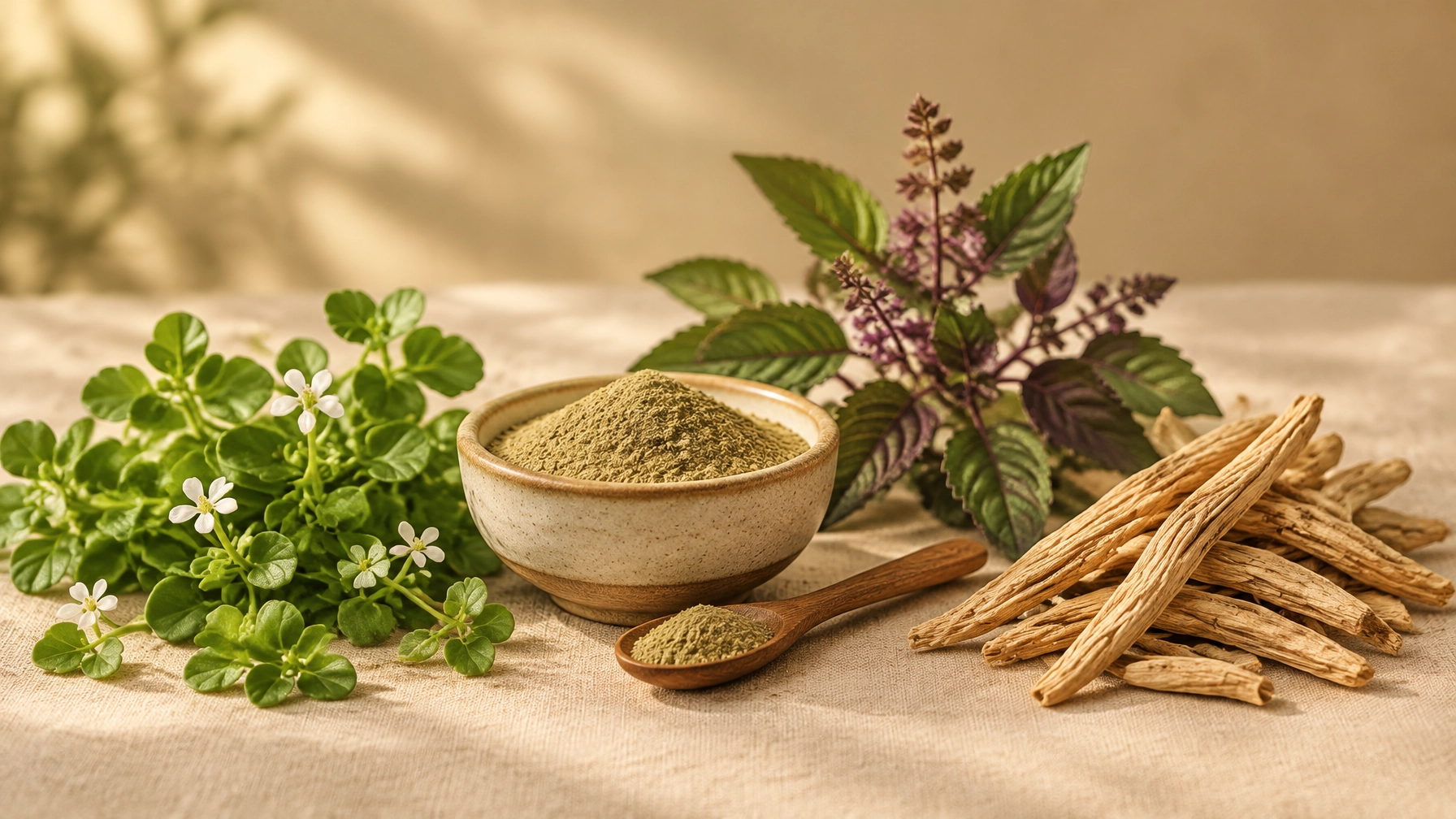
Brahmi, usually referring to Bacopa monnieri, is the most directly associated with memory and cognitive support. Tulsi, or holy basil, is primarily valued for stress regulation and emotional steadiness. Shatavari, Asparagus racemosus, is a nourishing rasayana traditionally associated with reproductive vitality, tissue support, and resilience during periods of depletion.
Together, they illustrate an important principle of Ayurvedic healing: the most appropriate herb depends upon the individual context rather than upon a universal promise of enhanced performance.
What Does “Adaptogen” Mean in Ayurvedic Terms?
“Adaptogen” is a modern herbal and physiological term generally used for substances thought to help the body respond more effectively to physical or psychological stress. It does not mean that an herb produces immediate concentration, functions as a stimulant, or is suitable for every person.
The closest Ayurvedic concepts are rasayana and medhya rasayana. Rasayana refers to rejuvenative strategies intended to support vitality, nourishment, resilience, and healthy longevity. Medhya rasayana is a more specific category associated with the mind, intellect, memory, learning, and mental composure.
These categories are not exact scientific equivalents of the modern word adaptogen. Rather, they offer a traditional framework for understanding how an herb may support the whole person. Consequently, herbs should be considered alongside sleep, nourishment, emotional state, digestion, workload, and seasonal influences, not as isolated solutions.
1. Brahmi: Calm Cognitive Support
Traditional Uses
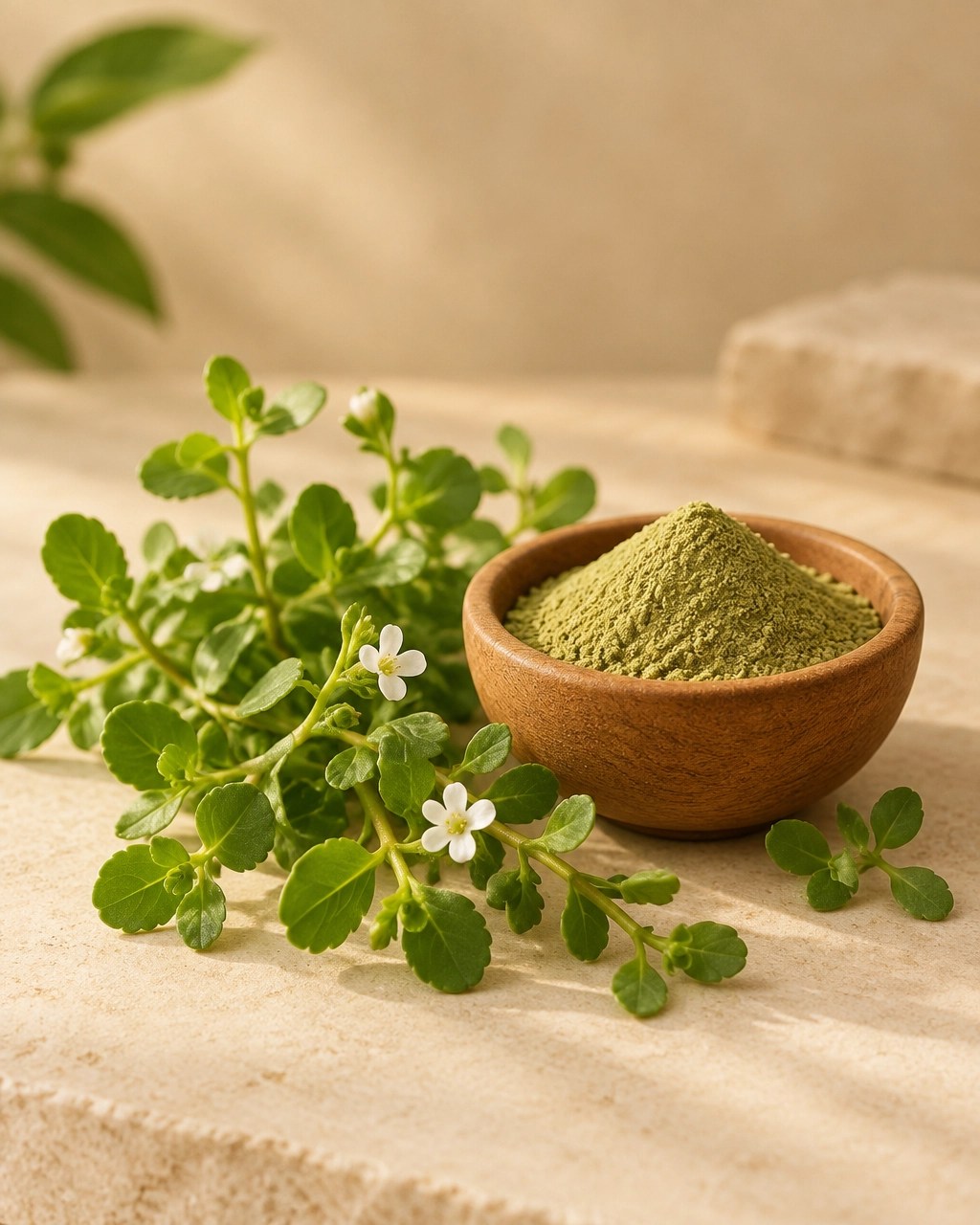
Brahmi is traditionally classified as a medhya rasayana, meaning an herb associated with mental clarity, memory, learning, and the refinement of cognitive function. In contemporary herbal products, Brahmi most commonly refers to Bacopa monnieri, although the name may occasionally be applied to Centella asiatica. Confirming the botanical identity is therefore essential when purchasing a product.
Ayurvedic practitioners traditionally use Bacopa when mental activity is accompanied by restlessness, anxiety, or difficulty retaining information. Its traditional profile is generally understood as calming rather than stimulating, which makes it particularly relevant to people seeking focused attention without excessive activation.
What the Evidence Suggests
Among these three herbs, Bacopa has the strongest human evidence for cognitive support. Some small clinical trials and reviews have reported improvements in selected memory measures after sustained use of particular standardized extracts. Results are not uniform across cognitive domains, study populations, or preparations. A recent randomized trial in adults reporting memory and attention problems found no between-group improvement in its primary cognitive outcomes after 12 weeks. Bacopa is not an established treatment for a neurological or psychiatric disorder.
Some studies have also examined perceived stress, anxiety, and cortisol, although these findings remain preliminary. The most reasonable interpretation is that Bacopa may support calm, sustained cognition over time rather than producing an immediate boost in concentration.
Forms and Dosage Considerations
Bacopa is available as:
- Powder mixed with warm water, milk, or another suitable beverage
- Capsules containing a standardized extract
- Traditional herbal preparations, including ghrita
- Liquid extracts and compound Ayurvedic formulas
Clinical studies have used different standardized extracts and doses, so there is no universally established dose that can be transferred safely from one product to another. This article does not recommend a dosage. Concentration, bacoside content, plant part, and manufacturing quality can vary substantially between products.
Reported adverse effects include gastrointestinal discomfort. People who are pregnant or breastfeeding, take prescription medicines, or have a medical condition should consult a qualified healthcare professional before using Bacopa. Evidence about long-term safety and interactions remains incomplete.
2. Tulsi: Stress Resilience and Mental Composure
Traditional Uses
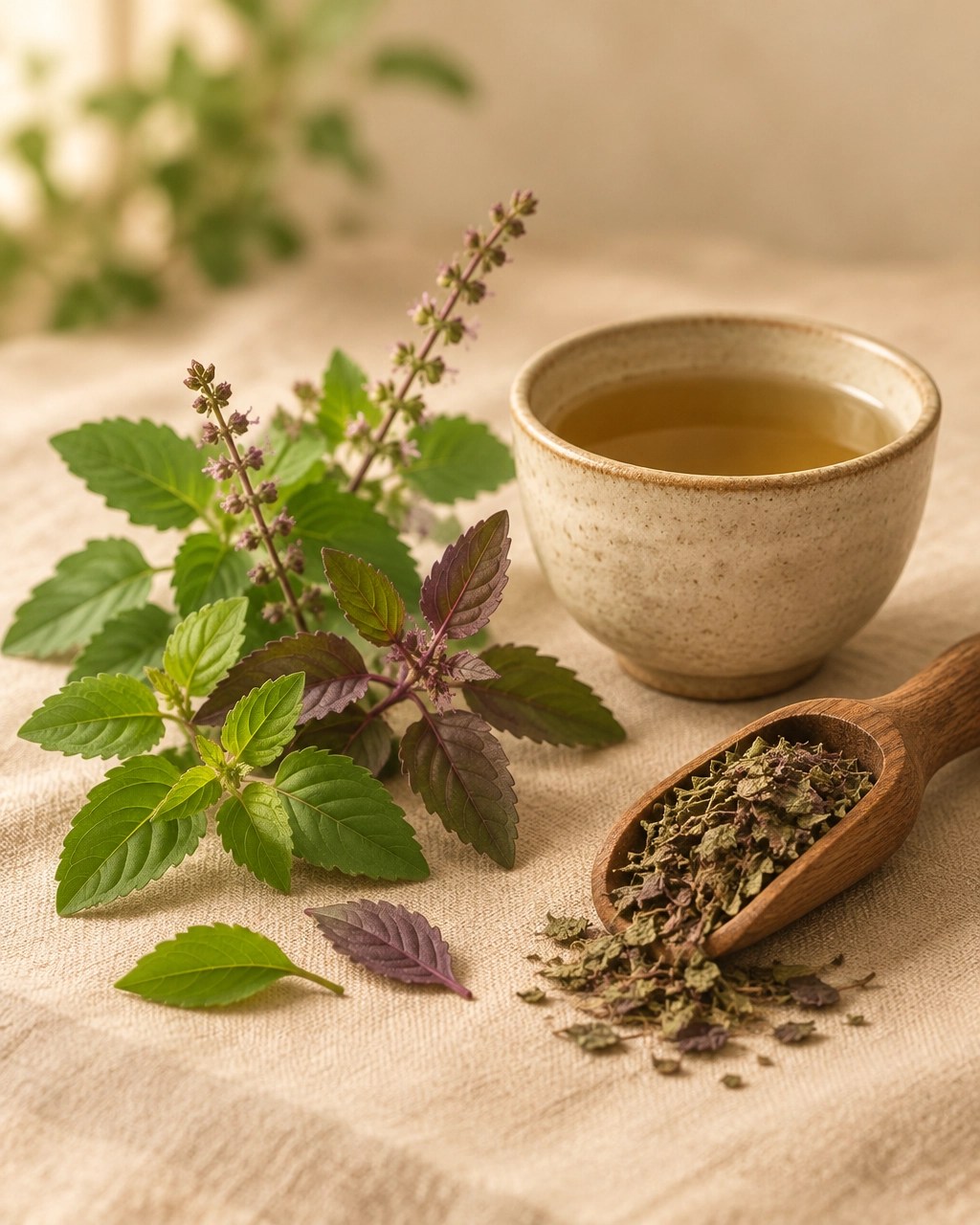
Tulsi, also called holy basil, is identified botanically as Ocimum tenuiflorum or Ocimum sanctum. It is traditionally respected as a sattvic and protective herb, often used to support respiratory health, digestion, emotional balance, and adaptation during periods of strain.
Unlike Bacopa, Tulsi is not primarily a memory herb. Its relevance to focus arises through stress regulation. When attention is repeatedly disrupted by tension, fatigue, or emotional overload, supporting a calmer internal environment may indirectly improve mental clarity.
What the Evidence Suggests
One randomized, double-blind, placebo-controlled trial of 100 adults experiencing stress examined a specific standardized Ocimum tenuiflorum extract over eight weeks and reported improvements in perceived stress and some sleep measures. The study was limited to that preparation and duration, and it disclosed industry funding and author relationships. These results cannot be generalized to every Tulsi tea, powder, or supplement, and they do not establish Tulsi as a treatment for an anxiety or sleep disorder.
Tulsi may therefore be most appropriate when distraction is closely connected with stress, mental fatigue, or difficulty winding down. Evidence for direct improvements in memory remains limited compared with Bacopa.
Simple Ways to Take Tulsi
Tulsi is commonly used as:
- A daily tea prepared from dried leaves
- Powder added to warm water or food
- Capsules containing leaf extract
- A component of compound herbal formulas
Tea is a gentle and accessible introduction, although the strength of a home infusion varies according to the amount of herb, steeping time, and plant quality. Extracts differ in concentration and composition; the dose used in one clinical trial should not be treated as a general recommendation. There is no established universal dose for Tulsi.
Short-term clinical data are limited. Safety during pregnancy and breastfeeding, long-term use, and possible interactions with medicines have not been adequately established. Consult a healthcare professional before using concentrated extracts, particularly when taking prescription medication.
3. Shatavari: Nourishment, Vitality, and Resilience
Traditional Uses
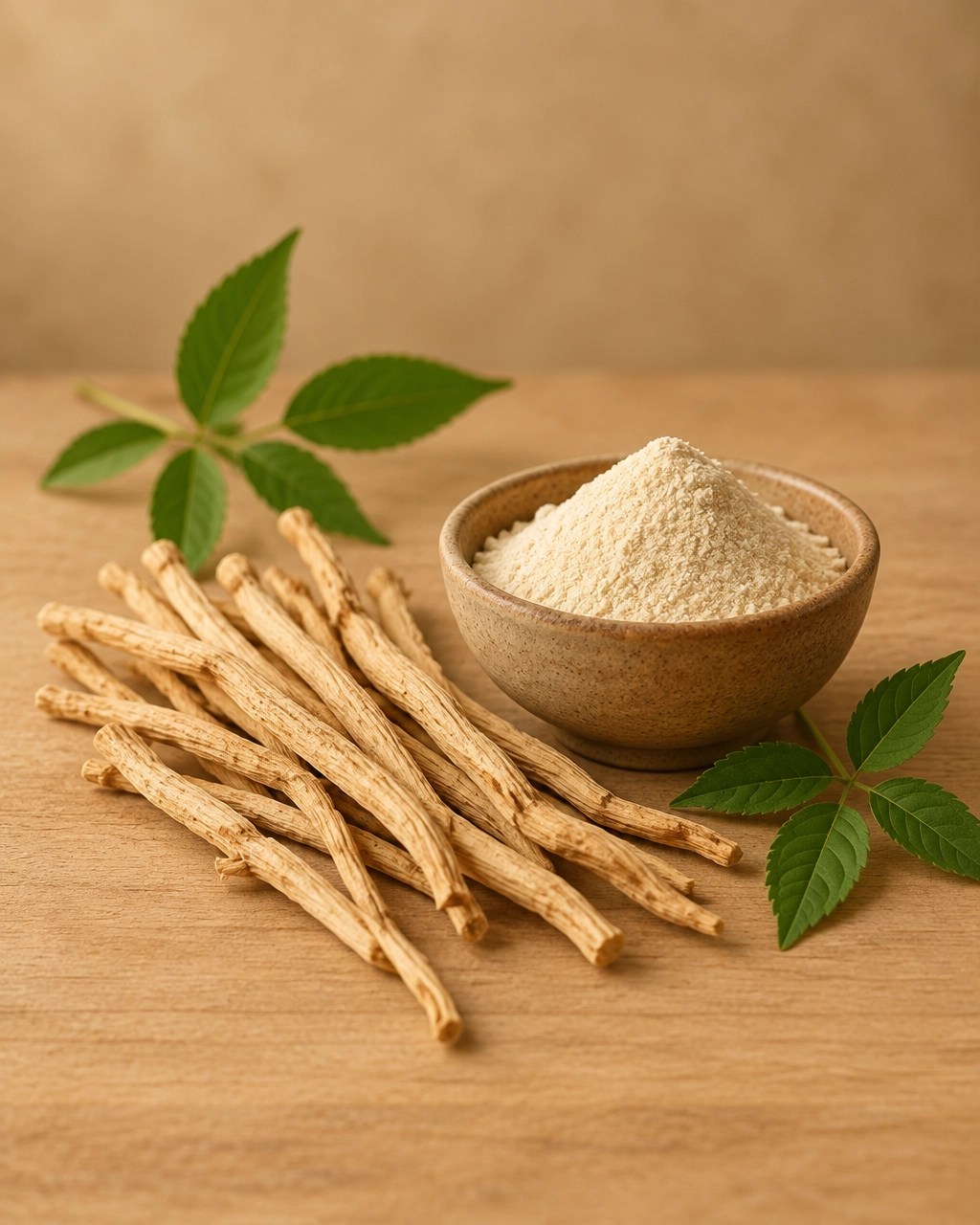
Shatavari, or Asparagus racemosus, is traditionally regarded as a nourishing rasayana, particularly supportive of female reproductive health, tissue nourishment, and vitality during periods of depletion. It is frequently associated with hormonal transitions, lactation, fertility, and the preservation of strength.
For focus, Shatavari occupies a different position from Brahmi. It is not generally selected as a primary cognitive herb. Instead, it may be considered when mental fatigue is accompanied by dryness, exhaustion, undernourishment, or a need for deeper restorative support, always within an individualized Ayurvedic assessment.
What the Evidence Suggests
Modern human research on Shatavari remains limited and is not evidence that it improves concentration. A recent short-term randomized study has examined a specific root extract for menopausal symptoms, but such findings cannot be generalized to fertility, lactation, cognition, or all Shatavari preparations. More independent research is needed.
This distinction between traditional use and modern evidence is important. Respect for Ayurveda includes preserving its classical knowledge while communicating clearly where clinical validation remains incomplete.
Forms and Dosage Considerations
Shatavari may be taken as:
- Whole-root powder
- Capsules or standardized root extract
- A milk-based preparation
- Ghrita or another traditional formulation
There is no universally established dose. Whole-root powders and concentrated extracts differ substantially in composition and strength, and doses used in one study should not be copied to another product. This article does not provide dosing instructions.
People with hormone-sensitive conditions, allergies to asparagus-family plants, complex medical histories, or those who are pregnant or breastfeeding should seek professional advice before using Shatavari. Traditional use does not replace contemporary safety assessment.
How the Three Herbs Differ
| Herb | Primary traditional emphasis | Relevance to focus | Common forms |
|---|---|---|---|
| Brahmi (Bacopa monnieri) | Memory, learning, mental composure | Most directly associated with cognitive support | Powder, capsules, ghrita |
| Tulsi (Ocimum tenuiflorum) | Stress resilience, emotional balance, vitality | Supports focus indirectly by moderating stress | Tea, powder, capsules |
| Shatavari (Asparagus racemosus) | Nourishment, reproductive vitality, rasayana support | More relevant to fatigue and depletion than direct cognition | Powder, capsules, ghrita |
A cautious approach avoids starting several concentrated extracts at once. This can make it easier to identify intolerance or adverse effects, but it does not establish that a supplement is necessary or beneficial.
Choosing Quality and Ethically Sourced Herbs
Quality begins with accurate botanical identification. A reputable product should list the Latin name, plant part, extraction method, serving size, and, when relevant, standardization markers such as bacosides in Bacopa.
Ethical sourcing is equally important. Buyers may look for transparent information about cultivation, harvest practices, contaminant testing, heavy metals, pesticides, and third-party quality verification. Sustainable sourcing helps protect medicinal plant populations and supports the communities involved in cultivation and processing.
Ayurveda Alliance’s research and educational work reflect the value of connecting classical knowledge with careful scientific inquiry. This evidence-aware perspective allows traditional herbs to be approached with both reverence and appropriate discernment.
A Balanced Starting Point
For direct cognitive support, Brahmi is the most relevant of these three herbs, although its effects are gradual and modest rather than immediate. For stress-related distraction, Tulsi may offer a gentler route toward greater composure. Shatavari is more appropriately considered when mental fatigue exists within a wider pattern of depletion or reproductive and hormonal concerns.
No herb can compensate for chronically insufficient sleep, excessive stimulation, irregular nourishment, or untreated medical conditions. Persistent difficulties with concentration, mood, memory, or energy deserve evaluation by a qualified healthcare professional.
Those wishing to explore Ayurvedic herbs with greater depth may visit Ayurveda Alliance’s educational resources, learn about membership and community opportunities, or contact the Alliance to connect with a wider community devoted to authentic knowledge, ethical practice, and holistic well-being.
References and further reading
- Kongkeaw C, Dilokthornsakul P, Thanarangsarit P, Limpeanchob N, Scholfield CN. Meta-analysis of randomized controlled trials on cognitive effects of Bacopa monnieri extract. Journal of Ethnopharmacology. 2014;151(1):528–535. The review found potential effects in selected cognitive measures but noted the need for larger, well-designed trials.
- Lopresti AL, Smith SJ, Metse AP, Drummond PD. A randomized, double-blind, placebo-controlled trial investigating the effects of an Ocimum tenuiflorum (Holy Basil) extract on stress, mood, and sleep in adults experiencing stress. Frontiers in Nutrition. 2022;9:965130. Results apply to the standardized extract studied; the paper reports funding and author relationships.
- National Center for Complementary and Integrative Health (NCCIH). Ayurvedic Medicine: In Depth. National Institutes of Health. Evidence limitations and safety considerations, including potential heavy-metal contamination.
- U.S. Food and Drug Administration (FDA). FDA Warns About Heavy Metal Poisoning Associated with Certain Unapproved Ayurvedic Drug Products.
Educational disclaimer: This article is for general educational purposes only and is not medical advice, diagnosis, or treatment. Evidence and safety vary by herb, preparation, and individual. Do not use herbs or supplements to replace prescribed care. Consult a qualified healthcare professional before use, especially during pregnancy or breastfeeding or when taking medication.