
The pursuit of human optimization has historically followed two seemingly divergent paths: the ancient, contemplative wisdom of the East and the data-driven, technological interventions of the West. Ayurveda, the "Science of Life," provides a comprehensive framework for health that has endured for over five millennia, emphasizing the delicate balance between the individual and the natural environment. Conversely, modern biohacking: the practice of utilizing science and technology to "hack" one’s own biology: seeks to enhance performance and longevity through precise, often measurable, modifications. While these disciplines may appear disparate, their integration offers a profound opportunity to achieve a state of holistic vitality. By synthesizing the qualitative insights of Ayurveda with the quantitative rigor of biohacking, individuals may develop a highly personalized strategy for enduring wellness.
The Philosophy of Personalization: Doshas and Data
At the heart of both Ayurveda and biohacking lies a fundamental commitment to personalization. Ayurveda posits that every individual possesses a unique constitutional blueprint, or Prakriti, which is defined by the three Doshas: Vata (air and space), Pitta (fire and water), and Kapha (earth and water). Health is viewed as the maintenance of this inherent balance, while disease is seen as a manifestation of Vikriti, or current imbalance. Similarly, biohacking relies upon the gathering of personalized data: ranging from genetic sequencing to blood biomarkers: to inform specific interventions.
When these two systems are integrated, the Dosha framework provides the necessary context for interpreting modern biological data. For example, a person with a Vata-dominant constitution may exhibit a heightened sensitivity to stress, which might be reflected in low heart rate variability (HRV) readings on a wearable device. By understanding their Ayurvedic profile, such an individual can select "biohacks" that are grounding and stabilizing, rather than stimulating. This synergy ensures that technological interventions are not merely reactive but are instead aligned with the underlying biological tendencies of the practitioner.

Circadian Mastery: Synthesizing Dinacharya and Light Biohacking
One of the most potent areas of convergence between these two disciplines is the management of circadian rhythms. Ayurveda emphasizes the importance of Dinacharya, a structured daily routine that aligns human activity with the solar cycle. Ancient texts advocate for rising before the sun (Brahma Muhurta) and maintaining consistent times for eating and sleeping to foster internal order and resilience.
Modern biohackers have arrived at similar conclusions through the study of chronobiology. They often utilize blue-light-blocking eyewear, specialized lighting systems, and rigorous sleep-tracking technology to optimize the production of melatonin and cortisol. Integrating these approaches involves using biohacking tools to validate and refine traditional Dinacharya practices. For instance, an individual might utilize a sleep tracker to observe how shifting their final meal to an earlier hour: a core Ayurvedic principle: positively impacts their deep sleep architecture. This objective feedback reinforces the timeless wisdom of Ayurvedic routines for modern life, demonstrating that ancient habits have measurable biological benefits.
Metabolic Optimization: Agni and Continuous Glucose Monitoring
The concept of Agni, or digestive fire, is central to Ayurvedic health. It is believed that robust Agni is essential for the proper transformation of food into energy and the prevention of Ama, or metabolic toxins. Ayurveda provides specific guidelines regarding what, when, and how to eat based on the strength of one’s digestive capacity and the current season.
Biohacking introduces a layer of precision to this concept through tools such as continuous glucose monitors (CGMs). A CGM provides real-time data on how specific foods affect an individual’s blood sugar levels. By pairing this technology with the Ayurvedic principle of eating according to one’s Dosha, individuals can identify precisely which "healthy" foods may be causing inflammatory glucose spikes. Furthermore, the biohacking trend of intermittent fasting mirrors the Ayurvedic practice of Langhana, or lightening therapy, which allows the digestive system to rest and repair. When practiced with an awareness of one’s constitution: recognizing, for example, that Vata types may require more frequent, grounding meals than Kapha types: intermittent fasting becomes a sophisticated tool for achieving metabolic flexibility without causing systemic depletion.

Nervous System Resilience: Breathwork and HRV
The regulation of the nervous system is perhaps the most immediate benefit of an integrated Ayurvedic and biohacking practice. Ayurveda utilizes Pranayama (breath control) and meditation to cultivate a state of Sattva, or mental clarity and equilibrium. These practices are designed to shift the body from a sympathetic (fight-or-flight) state to a parasympathetic (rest-and-digest) state.
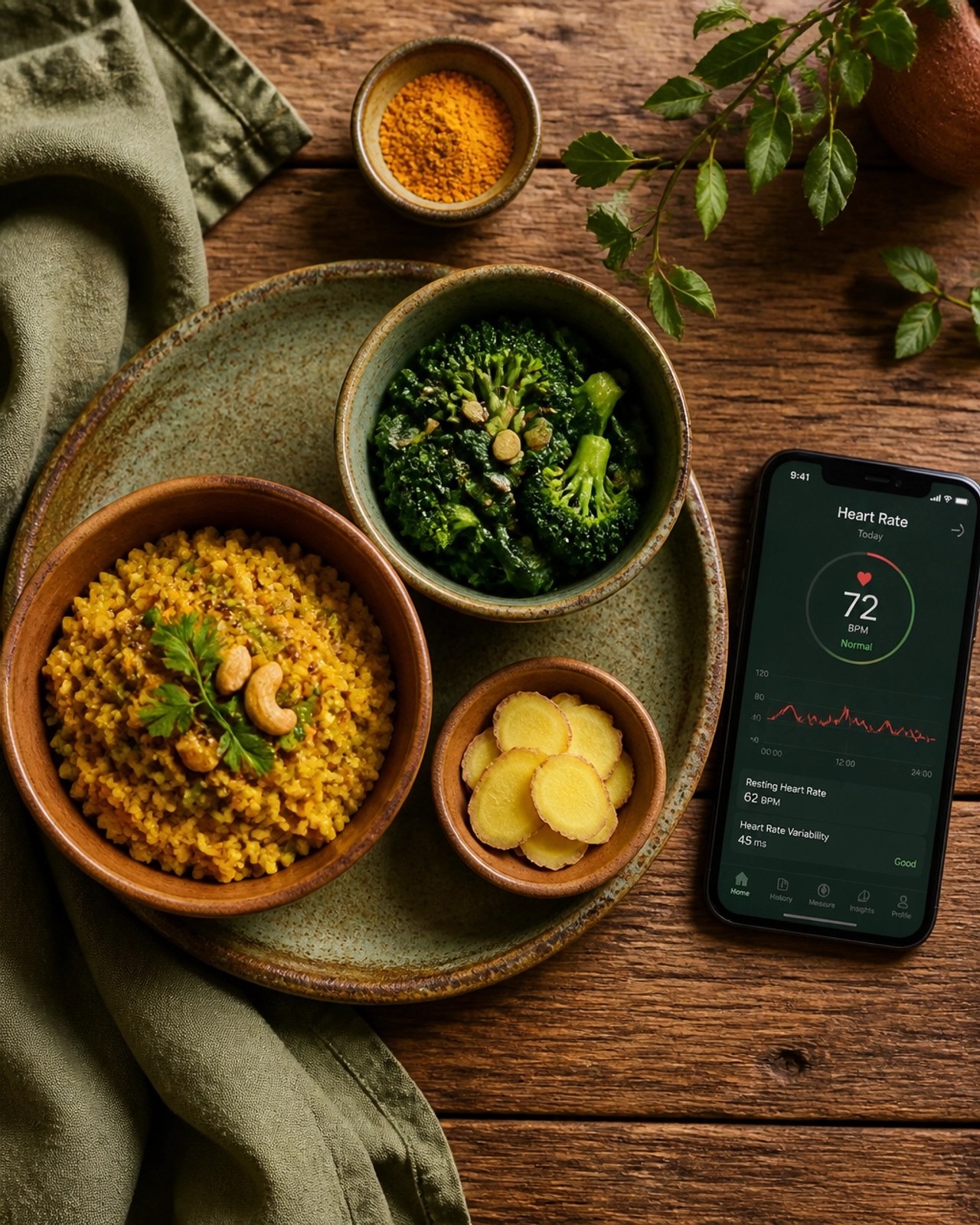
Modern biohacking quantifies this shift through heart rate variability (HRV), a primary metric for assessing the health of the autonomic nervous system. High HRV is generally associated with greater resilience and cardiovascular fitness. By monitoring HRV, practitioners can objectively measure the efficacy of different Pranayama techniques. For example, one might find that Nadi Shodhana (alternate nostril breathing) produces a significant increase in HRV during periods of high cognitive demand. Consequently, the ancient practice is no longer merely a spiritual exercise but a validated biological intervention for maintaining equilibrium in a high-stress environment.
Longevity Science: Rasayana and Biological Age Markers
The ultimate goal of many biohackers is the extension of the "healthspan": the period of life spent in good health. This aligns perfectly with the Ayurvedic branch of Rasayana, which focuses on rejuvenation and longevity. Rasayana protocols involve the use of specific herbs, such as Ashwagandha and Amalaki, alongside ethical living and disciplined lifestyle habits.

Contemporary science is now investigating these traditional rejuvenatives through the lens of epigenetics and biological age markers. Recent research into adaptogens like Ashwagandha suggests they may assist in modulating the stress response at a cellular level, potentially slowing the markers of biological aging. By combining the consistent use of Ayurvedic tonics with modern diagnostic tests that measure telomere length or DNA methylation, individuals can create a comprehensive longevity "stack." This approach ensures that the pursuit of a longer life is grounded in a foundation of current vitality and systemic balance.
Nutrient Density and the Modern Plate
In the modern era, the quality of our sustenance is often compromised by industrial processing and soil depletion. Ayurveda teaches that food should be "alive" and infused with Prana, or life-force energy. Biohacking complements this by emphasizing nutrient density and the supplementation of specific micronutrients that may be lacking in the modern diet.
An integrated approach involves selecting seasonal, whole foods according to Ayurvedic principles and then optimizing that diet with targeted nutraceuticals based on laboratory testing. For example, a Pitta-dominant individual might focus on a cooling, anti-inflammatory diet while also supplementing with high-quality Omega-3 fatty acids to further reduce systemic inflammation, as confirmed by a C-reactive protein (CRP) test. This creates a synergy where traditional nourishment and modern supplementation work in harmony to support biological resilience.
Conclusion: The Future of Holistic Equilibrium
The integration of Ayurvedic lifestyle principles with modern biohacking techniques represents the evolution of holistic health. It is a transition from a generalized approach to wellness toward a highly refined, data-informed practice of self-care. By respecting the historical depth of Ayurvedic wisdom and embracing the analytical power of modern technology, we do not have to choose between tradition and progress.
Instead, we can employ technology as a "digital mirror" that reflects the internal states described by ancient sages. When we use a wearable device to confirm the benefits of a morning meditation, or a glucose monitor to validate our constitutional dietary choices, we bridge the gap between abstract concepts and practical application. Ultimately, this synthesis allows us to live in greater harmony with our nature, fostering a state of vitality that is both deeply felt and objectively measured. Through this measured and intentional integration, we can achieve a state of balance that is truly resilient in the face of modern challenges.